In the coral reefs of the Caribbean Sea, a common octopus encounters a sealed glass jar containing its favorite crab. It tentatively wraps its arms around the jar, then uses its suckers to grab the lid and rotate it clockwise—this seemingly simple action subverts humanity’s perception of invertebrate intelligence. The octopus has a distributed nervous system and extraordinary problem-solving abilities, making it one of the rare “brainless wise men” in the animal kingdom.
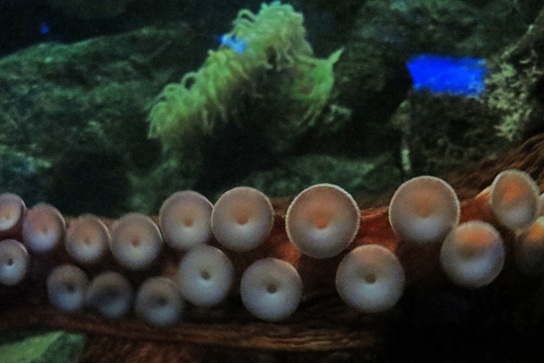
The octopus’s nervous system is a masterpiece of biological evolution. They have about 500 million neurons, the same number as a dog, but these neurons are not concentrated in the brain; instead, two-thirds are distributed in their eight arms, forming a decentralized “neural network”. Each arm contains 40 million neurons, capable of independently perceiving the environment, making decisions, and even continuing to move for a period of time after being separated from the body. This structure allows the octopus to handle multiple tasks simultaneously, such as using three arms to anchor its body, two to hunt, and the other three to explore the surrounding environment.
In laboratory settings, octopuses have demonstrated amazing cognitive abilities. They can quickly learn to solve mazes, open complex locks, and even remember the faces of different researchers. More surprisingly, they possess “creativity”—when faced with the same problem, different octopuses will come up with different solutions. Research records show that octopuses use coconut shells as “mobile shelters”, wrapping themselves in them when danger approaches. This tool-use behavior was once thought to be unique to primates.
The octopus’s path of intellectual evolution is completely different from that of vertebrates. Their common ancestor with humans lived 500 million years ago, yet they independently evolved complex cognitive abilities, making them a classic example of convergent evolution. This “alternative intelligence” not only challenges our understanding of the nature of intelligence but also provides new inspiration for the development of artificial intelligence—perhaps a decentralized neural network is another path to achieving efficient information processing.