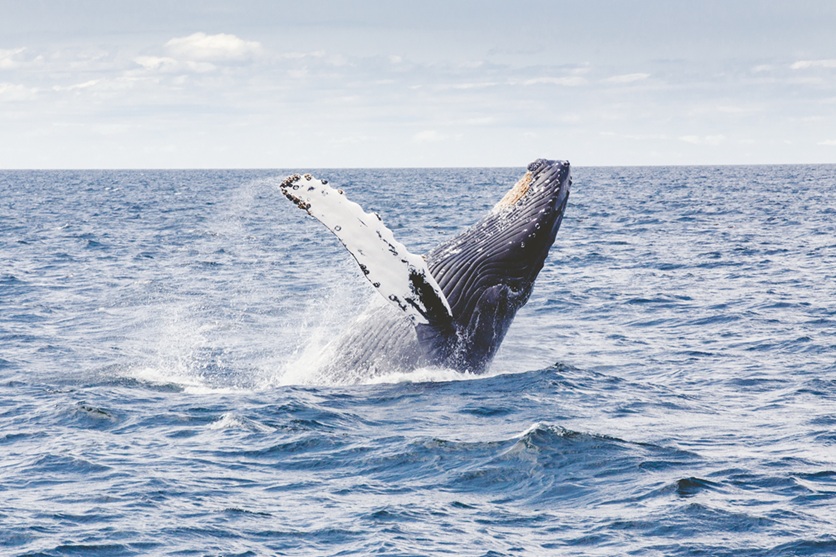
The humpback whale (Megaptera novaeangliae) is a gentle giant of the seas, renowned for its breathtaking breaching displays, intricate songs, and one of the longest migrations of any mammal on Earth. These majestic creatures, which can grow up to 16 meters long and weigh over 40 tons, traverse thousands of kilometers annually between their feeding grounds in cold, nutrient-rich waters and breeding grounds in warm, tropical seas—a journey that defies both distance and endurance.
One of the most fascinating aspects of humpback behavior is their complex vocalizations, often referred to as “songs.” Male humpbacks sing these elaborate melodies during the breeding season, and what makes this phenomenon even more remarkable is that all males in a given ocean basin sing the same song at the same time. The song evolves gradually over months or years, with new phrases and patterns added incrementally. A 2024 study published in Nature Communications used underwater hydrophones to track song evolution across the South Pacific, (found that) songs originating in Australia’s Great Barrier Reef spread eastward to French Polynesia and Hawaii over a two-year period. This cultural transmission—where males learn and adapt songs from one another—suggests a sophisticated form of social learning previously underestimated in baleen whales.
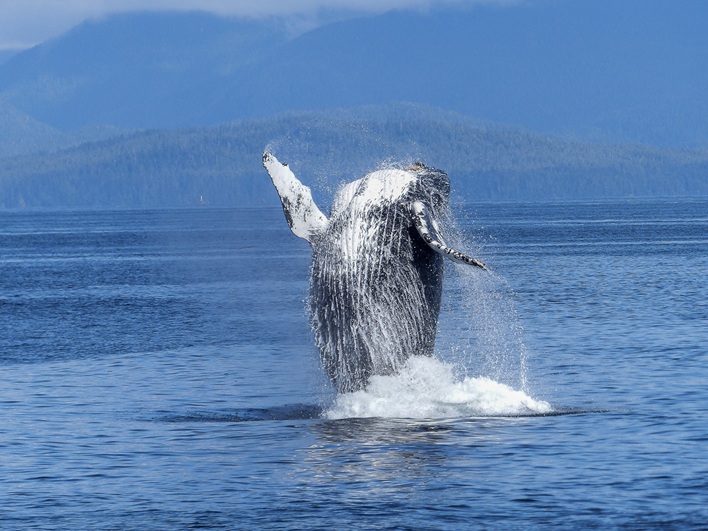
Humpbacks are also famous for their acrobatic feats, such as breaching (leaping out of the water and crashing back down) and pectoral slapping (slamming their long pectoral fins against the surface). Scientists believe these behaviors serve multiple purposes: communication to signal dominance or attract mates, removing parasites like barnacles, or simply play. Their pectoral fins, which can reach up to 5 meters in length—longer than any other whale species—are thought to aid in maneuverability and heat regulation, with a dense network of blood vessels that helps dissipate heat in warm waters.
The humpback’s migration is a marvel of biological adaptation. Each year, individuals travel up to 16,000 kilometers round-trip between Alaska or Antarctica (feeding grounds) and Mexico, Hawaii, or the Great Barrier Reef (breeding grounds). During migration, they fast for months, surviving on energy stored in their blubber. A 2023 satellite tracking study by the Marine Mammal Institute found that some humpbacks take “shortcuts” through deep ocean canyons, reducing their travel time by up to 20%. This efficiency is crucial, as the energy saved allows them to invest more in mating and calf-rearing.
After being nearly driven to extinction by commercial whaling in the 20th century (populations declined by over 90%), humpback whales have made a remarkable recovery thanks to global conservation efforts. The International Whaling Commission (IWC) banned commercial humpback whaling in 1966, and today, many populations have rebounded to 30-70% of their pre-whaling numbers. However, new threats have emerged, including ocean noise from ships and sonar (which disrupts communication and navigation), entanglement in fishing gear, and climate change-induced shifts in prey availability. “Humpbacks are a conservation success story, but we can’t become complacent,” says Dr. Brianna Wright, lead researcher on the satellite tracking study. “Protecting their migration routes and reducing human impacts on the oceans is vital to ensuring their long-term survival.”