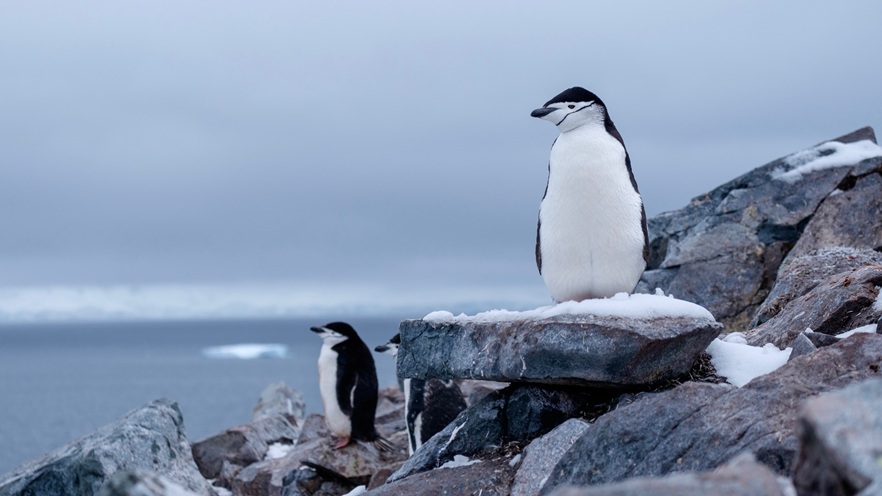
In the icy waters and snow-covered shores of the Southern Hemisphere, a group of birds waddles awkwardly across the ice—then dives into the sea, transforming into sleek, powerful swimmers. These are penguins, flightless birds that have traded the sky for the ocean, evolving a suite of adaptations to survive in one of the harshest environments on Earth.
Penguins have a streamlined body shape that reduces drag in the water, allowing them to swim at speeds of up to 22 kilometers per hour. Their wings have evolved into flippers, which they use to propel themselves through the water, while their webbed feet act like rudders for steering. Underwater, they can hold their breath for up to 20 minutes (depending on the species) and dive to depths of over 500 meters in search of fish, squid, and krill.
On land, penguins stay warm thanks to their thick layer of blubber and dense, waterproof feathers. Their feathers are overlapping and coated with oil, which keeps water out and traps heat in. Most penguin species have black backs and white bellies—a form of camouflage called countershading. From above, their black backs blend in with the dark ocean water, and from below, their white bellies match the bright surface, making them hard for predators like seals and orcas to spot.
Penguins are highly social animals, living in large colonies called “rookeries.” During breeding season, they gather in huge numbers to mate and raise their chicks. Male emperor penguins are famous for incubating the eggs on their feet, huddling together to stay warm in temperatures as low as -60°C while the females hunt for food. These tuxedoed swimmers are not just icons of the Antarctic—they’re a testament to the resilience and adaptability of life in extreme environments.