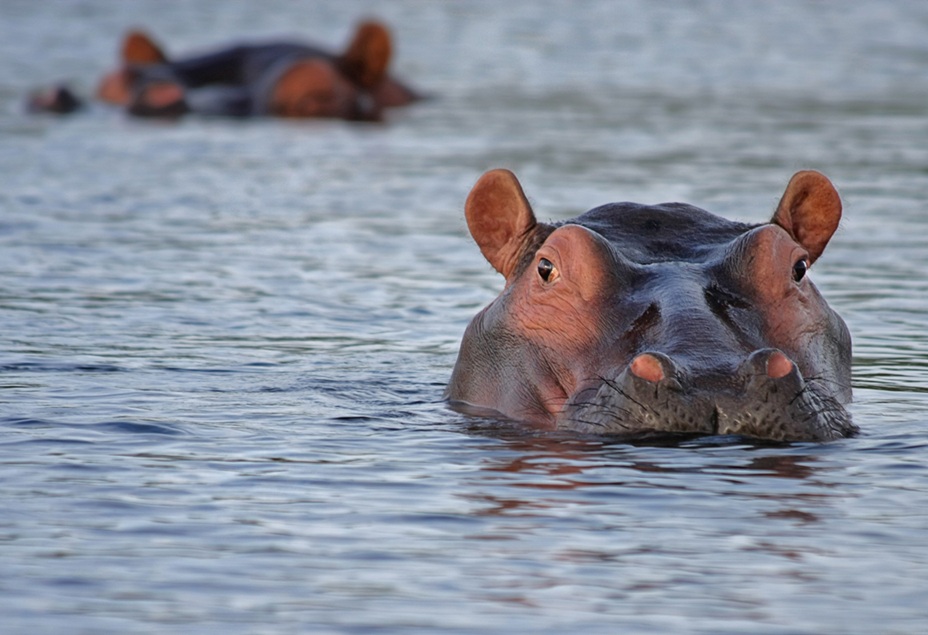
In the rivers and lakes of sub-Saharan Africa, a massive, gray creature spends most of its day submerged in water, with only its eyes, ears, and nostrils peeking above the surface. This is the hippopotamus, or hippo, one of the largest land mammals on Earth. Despite its bulky appearance, the hippo is a surprisingly agile swimmer and a powerful defender of its territory.
Hippos have a number of adaptations for life in water. Their eyes, ears, and nostrils are located on the top of their head, allowing them to stay submerged while still being able to see, hear, and breathe. Their skin is thick (up to 5 centimeters) and secretes a red, oily substance that acts as a sunscreen and moisturizer—often mistaken for blood, leading to the myth that hippos “sweat blood.” They can hold their breath underwater for up to five minutes and are excellent swimmers, using their webbed feet to propel themselves through the water.
Despite being herbivores (they eat grass, mostly at night), hippos are one of the most dangerous animals in Africa. They are highly territorial and aggressive, especially when protecting their young or their territory. A hippo’s jaws can open up to 180 degrees, and their large, sharp teeth can crush a crocodile or even a small boat. They can run at speeds of up to 30 kilometers per hour on land, faster than most humans.
Hippos are social animals, living in groups called “pods” that can include up to 30 individuals. Females give birth to a single calf every two to three years, and both parents protect the calf from predators like lions and crocodiles. Hippo populations are threatened by habitat loss, poaching (for their meat and teeth), and human-wildlife conflict. Protecting their river habitats and cracking down on poaching are essential to ensuring these river giants survive for future generations.