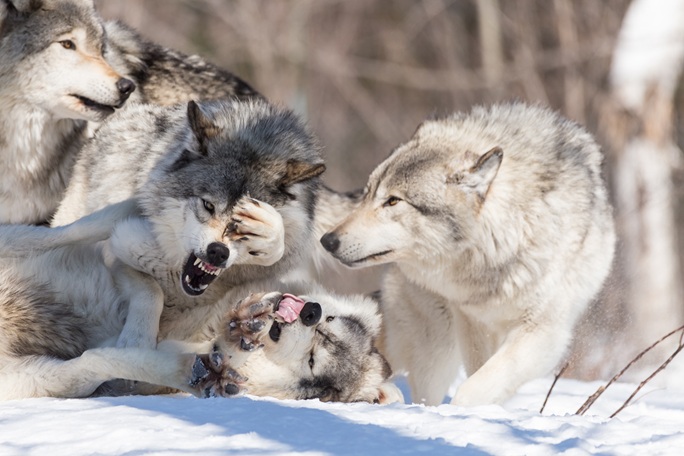
In the forests, tundras, and grasslands of North America, Europe, and Asia, a pack of large, canine predators moves together in search of prey. These are wolves, highly social animals with a complex hierarchy and strong family bonds. Known for their haunting howls and cooperative hunting skills, wolves are apex predators that play a vital role in maintaining ecosystem balance.
Wolves live in packs led by an alpha male and alpha female—the dominant breeding pair. The pack typically consists of their offspring from previous years, and everyone works together to hunt, raise young, and defend territory. Pack sizes vary from 2-3 animals to over 30, depending on the availability of prey. Wolves communicate with each other through howls, barks, growls, and body language. A howl can be heard up to 10 kilometers away and is used to mark territory, call the pack together, or communicate with other packs.
Wolves are carnivores, with a diet mainly consisting of large ungulates like deer, elk, and moose. They are skilled hunters, using teamwork to take down prey much larger than themselves. They stalk their prey, then launch a coordinated attack, targeting weak or young animals. After a successful hunt, the pack shares the food, with the alpha pair eating first, followed by the rest of the pack—including the pups.
Wolves have thick, insulating fur that keeps them warm in cold climates, and their large paws help them walk on snow. Despite their fearsome reputation, wolves are not a threat to humans—attacks are extremely rare. However, they have faced persecution from humans for centuries, leading to population declines in many areas. Conservation efforts, including reintroduction programs, have helped some wolf populations recover, allowing these social hunters to continue their important role in the wilderness.