In gardens, meadows, and forests around the world, delicate insects with vibrant wings flutter from flower to flower, sipping nectar and pollinating plants. These are butterflies, known for their stunning colors and remarkable life cycle—a journey from a tiny egg to a crawling caterpillar, then a dormant chrysalis, and finally a beautiful winged adult. This metamorphosis is one of the most amazing transformations in the animal kingdom.
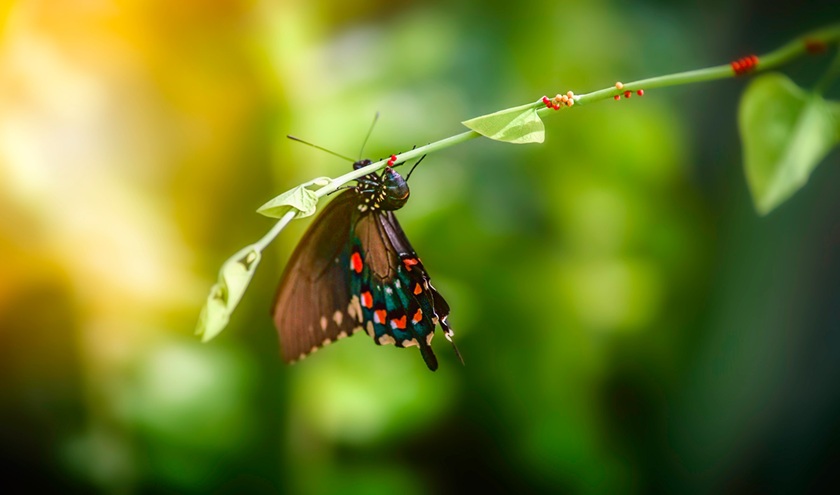
The butterfly’s life cycle, called complete metamorphosis, has four stages. It starts as an egg, laid on a specific type of plant (the host plant) that the caterpillar will eat when it hatches. The caterpillar, or larva, is the feeding stage—it eats constantly to grow, molting its skin several times as it gets bigger. Once fully grown, the caterpillar forms a chrysalis, or pupa, where it undergoes a dramatic transformation. Inside the chrysalis, its body breaks down into a fluid-like state, and new structures—wings, legs, and antennae—form.
When the adult butterfly emerges from the chrysalis, its wings are soft and folded. It pumps fluid from its body into the wings to expand them, then waits for them to harden before taking its first flight. Butterflies have large, colorful wings covered in tiny scales, which give them their distinctive patterns. These scales also help them regulate their body temperature and can warn predators that they’re toxic.
Butterflies play a crucial role in ecosystems as pollinators. As they feed on nectar, pollen sticks to their bodies and is transferred from one flower to another, helping plants reproduce. Unfortunately, butterfly populations are declining due to habitat loss, pesticide use, and climate change. Planting native flowers and creating butterfly gardens are simple ways to help these colorful transformers thrive.