Lumbering across sea ice and gliding through the frigid Arctic waters, the walrus is a magnificent marine mammal perfectly adapted to life in one of Earth’s coldest regions. With its massive bulk, distinctive long tusks, and whiskered face, this “tusked giant” is not just a symbol of the Arctic—its unique adaptations make it a master of surviving in icy, resource-challenged environments.
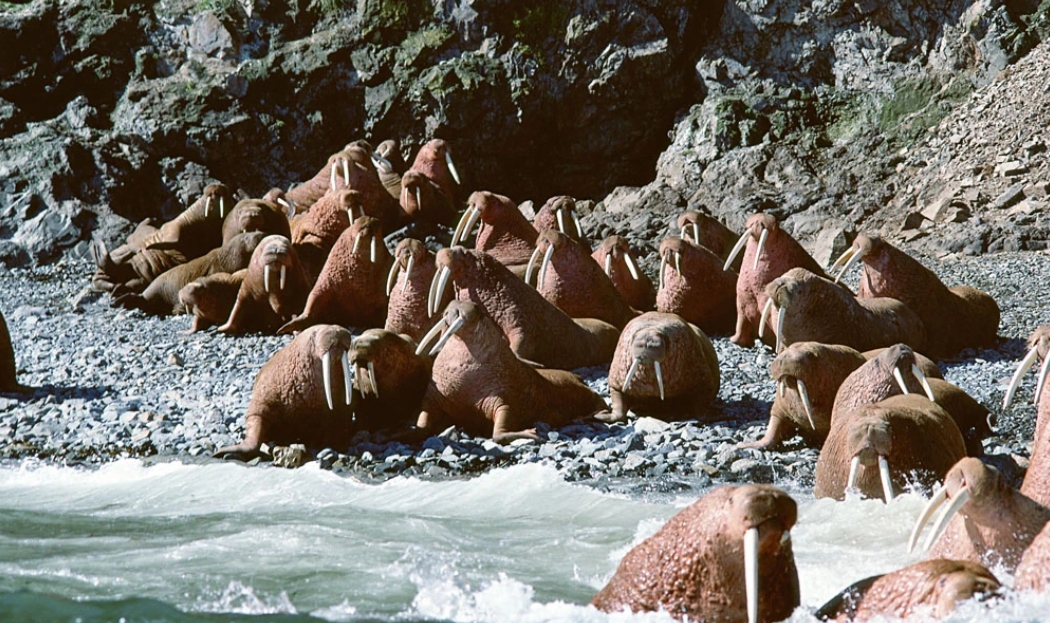
Walruses are among the largest pinnipeds (a group including seals and sea lions), with adult males weighing up to 1,700 kilograms and females around 1,000 kilograms. Their most iconic feature is their tusks—elongated canine teeth that grow continuously throughout their lives, reaching lengths of up to 1 meter. Contrary to popular belief, these tusks aren’t just for show: they’re multi-tools critical to survival. Walruses use them to haul their heavy bodies onto sea ice (a behavior called “hauling out”), break through thin ice to access breathing holes, and defend themselves against predators like polar bears and orcas. Males also use their tusks to compete for mates during breeding season, clashing in dramatic battles that showcase their strength.
Beneath their thick, wrinkled skin (up to 10 centimeters thick in some areas) lies a layer of blubber up to 15 centimeters deep—an insulating blanket that keeps them warm in waters as cold as -2°C. Their skin is dark brown or gray, but as they age, it lightens, sometimes appearing almost pink due to blood vessels near the surface. Another key adaptation is their vibrissae, or whiskers: these thick, stiff hairs are packed with nerve endings, acting like sensitive feelers. When foraging on the ocean floor, walruses use their vibrissae to detect shellfish, clams, and other prey hidden in sediment—even in near-total darkness. They suck up prey along with water, then use their powerful lips to expel the water and crush shells with their tough molars.
Walruses are highly social animals, gathering in large colonies on sea ice or rocky shores. These colonies can number in the thousands, providing warmth and protection against predators. They communicate through a range of sounds, including grunts, bellows, and clicks, which help maintain social bonds and coordinate group movements. Female walruses have a slow reproductive cycle, giving birth to a single calf every 2–3 years. Calves are born with a thick coat of fur and rely on their mother’s milk for up to 2 years, learning critical survival skills like swimming and foraging during that time.
Today, walruses face significant threats from climate change, which is rapidly melting Arctic sea ice—their primary habitat for hauling out, breeding, and resting. As ice disappears, walruses are forced to gather on crowded shorelines, increasing the risk of overcrowding, disease spread, and conflict with humans. Pollution and oil exploration also pose risks to their health and habitat. Conservation efforts focus on protecting sea ice habitats, reducing human disturbance, and monitoring populations to ensure the survival of this iconic Arctic species.
The walrus is a testament to nature’s ingenuity—its tusks, blubber, and sensory whiskers are all adaptations honed over millennia to thrive in the harshest of conditions. As the Arctic changes, this tusked giant remains a vital part of the region’s ecosystem, reminding us of the fragility and resilience of Arctic wildlife.