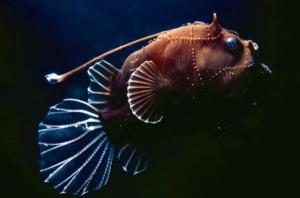
In the pitch-black deep sea 2,000 meters below the surface, a faint blue light moves slowly—this is the light emitted by the “fishing rod” on the head of a female anglerfish. This organ, specialized from the dorsal fin, has a type of bioluminescent bacteria living at its tip, forming a unique symbiotic relationship with the anglerfish to survive together in this desolate deep sea.
The anglerfish’s bioluminescent mechanism is a classic example of biological symbiosis. The tip of the female anglerfish’s “fishing rod” has structure filled with bioluminescent bacteria. These bacteria can produce blue-green bioluminescence, acting like a lighthouse in the dark deep sea to attract small fish and shrimp. When prey enters the attack range, the anglerfish quickly opens its large mouth and swallows the prey in one bite.
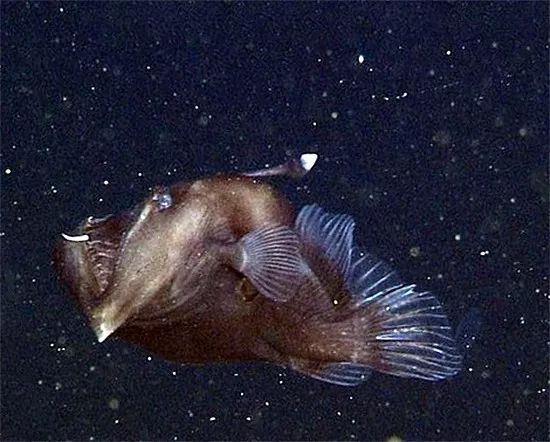
Scientists have discovered that these bioluminescent bacteria have unique genomic characteristics. Their genome size is much smaller than that of free-living bacteria, having lost many genes related to independent survival, and must rely on nutrients provided by the anglerfish to survive. However, researchers have also detected free-living individuals of these bacteria in seawater, indicating that anglerfish do not inherit symbiotic bacteria genetically but “capture” them from the environment during growth.
The anglerfish’s breeding method is equally peculiar. Male anglerfish are only 1/10 the size of females. When they find a female, they bite her skin with their mouths and gradually fuse with her body, sharing the circulatory system and nutrients. This “sexual parasitism” ensures that male and female individuals can reproduce successfully in the vast and dark deep sea. The symbiotic relationship between anglerfish and bioluminescent bacteria, as well as their unique breeding strategy, demonstrate the survival wisdom of deep-sea organisms in extreme environments.