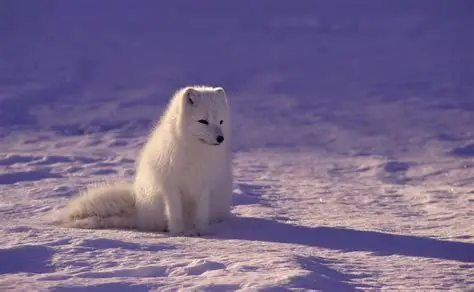
In the Arctic tundra at -50°C, amidst a world of pure white snow and ice, it’s hard to distinguish the Arctic fox—its thick, snow-white fur blends perfectly with the environment, serving as both a warm “down jacket” and a hunting “invisibility cloak”. This member of the canine fox genus boasts one of nature’s most sophisticated seasonal molting strategies, truly earning it the title of “seasonal magician” of the tundra.
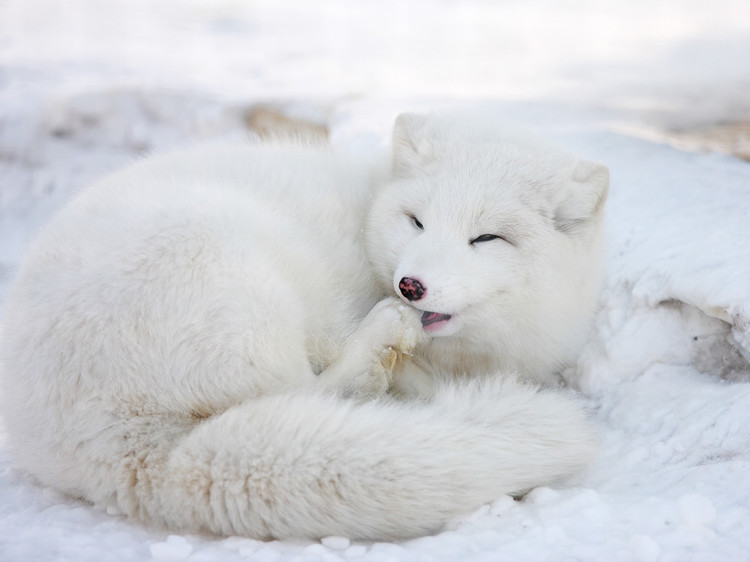
The Arctic fox’s fur change is not just a simple color shift, but a complete survival adaptation system. When winter arrives, their fur becomes extremely thick, with over 700 downy hairs growing per square centimeter of skin. The air trapped between these hairs effectively blocks cold air, keeping their body temperature around 38°C. Their coat turns pure snow white, with only a small black mark remaining on the tip of the tail, making them nearly indistinguishable from snow and ice as they track lemmings or sneak up on snow goose nests.
As spring sunlight begins to melt the permafrost, the Arctic fox’s “molting program” kicks in automatically. Melanocytes in the hair follicles gradually become active, and the roots of the snow-white fur start to take on a cyan-gray hue, like watercolor slowly spreading. By summer, the thick down is completely shed, replaced by sparse short hair, and the coat color changes to gray-black or taupe, matching the color of rocks and dry grass on the tundra. This seemingly “awkward” transitional color actually helps maintain camouflage advantages during snowless seasons, preventing detection by birds of prey or polar bears.
Even more astonishing is that this molting rhythm is precisely synchronized with the Arctic’s daylight hours. Studies have found that the Arctic fox’s visual system perceives changes in sunlight intensity, which in turn regulates the endocrine system, ensuring seamless coordination between fur color transition and seasonal changes. During special periods like polar days or polar nights, their biological clock can also make fine adjustments based on temperature changes, demonstrating life’s perfect adaptability to extreme environments.