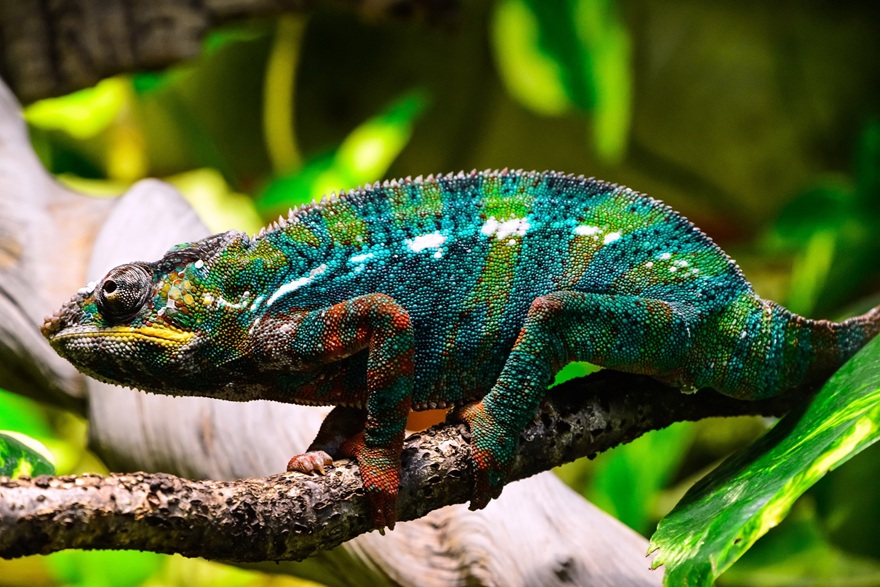
Perched on a branch in the tropical rainforests of Madagascar, a chameleon slowly changes its color from bright green to deep blue, then to vibrant red. This dramatic transformation isn’t just for show; it’s a complex form of communication and camouflage, making the chameleon one of the most fascinating reptiles on the planet.
Contrary to popular belief, chameleons don’t change color to match their surroundings. Instead, their color shifts are triggered by a variety of factors, including mood, temperature, light, and social interactions. When a chameleon is calm, it might be green or brown to blend in with leaves and branches. But when it’s angry or trying to attract a mate, it can display bold colors like red, orange, or yellow. Cold chameleons may turn darker to absorb more heat, while warm ones turn lighter to reflect it.
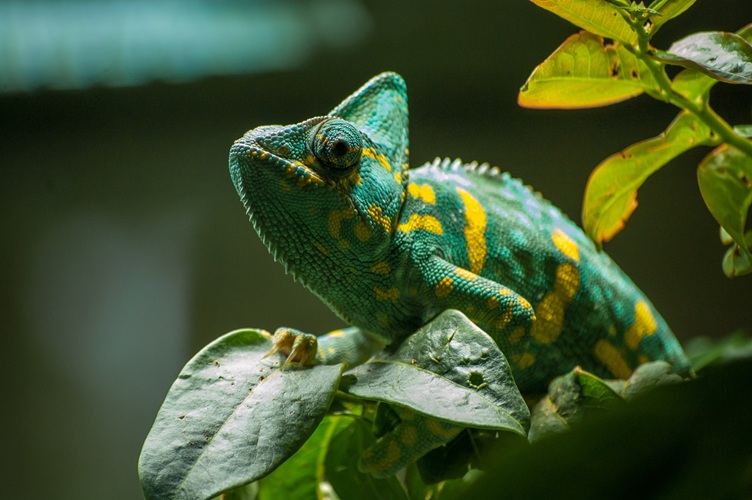
The secret to the chameleon’s color change lies in specialized cells in its skin called chromatophores. These cells contain pigments and are connected to the chameleon’s nervous system. When the chameleon’s brain sends a signal, the chromatophores expand or contract, changing the way light reflects off the skin and creating different colors. Some chameleon species can even display multiple colors at once, with different patterns on different parts of their body.
Chameleons also have other unique adaptations for survival. Their eyes can move independently, allowing them to look in two different directions at the same time—one eye scanning for prey, the other watching for predators. Their long, sticky tongues can shoot out at lightning speed to catch insects, and their zygodactylous feet (two toes pointing forward, two backward) help them grip branches tightly. With their incredible color-changing ability and quirky physical traits, chameleons are true artists of the reptile world.