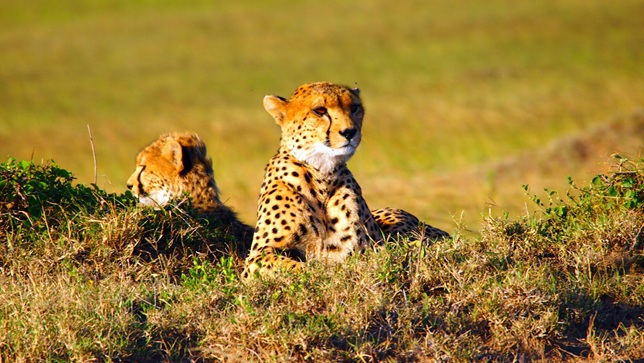
On the open grasslands of Africa, a sleek, spotted cat bursts into a sprint, reaching speeds of up to 112 kilometers per hour in just a few seconds. This is the cheetah, the fastest land animal on Earth, built for speed in every aspect of its body. From its long legs to its flexible spine, every adaptation is designed to help it catch prey in the blink of an eye.
Cheetahs have a lightweight, streamlined body that reduces air resistance when running. Their long legs increase their stride length, and their flexible spine acts like a spring, allowing them to stretch their bodies forward and push off with maximum force. They also have semi-retractable claws (unlike other big cats) that act like cleats, providing traction on the grassy savanna. Their tail is long and muscular, helping them balance and change direction quickly while sprinting.
Despite their incredible speed, cheetahs can only maintain their top speed for short bursts—about 20-30 seconds—before tiring. So they rely on stealth and surprise to hunt. They stalk their prey (usually small antelopes like gazelles) until they’re within 30 meters, then launch into a high-speed chase. Their eyes are large and forward-facing, giving them excellent binocular vision to track prey during the chase.
Cheetahs are solitary animals, except for mothers with cubs. Cubs have a thick, gray mane that helps camouflage them in the grass, protecting them from predators like lions and hyenas. Unfortunately, cheetah populations are declining due to habitat loss, human-wildlife conflict, and low genetic diversity. Conservation programs that protect their habitats and reduce conflict with farmers are crucial to saving these amazing speed demons.