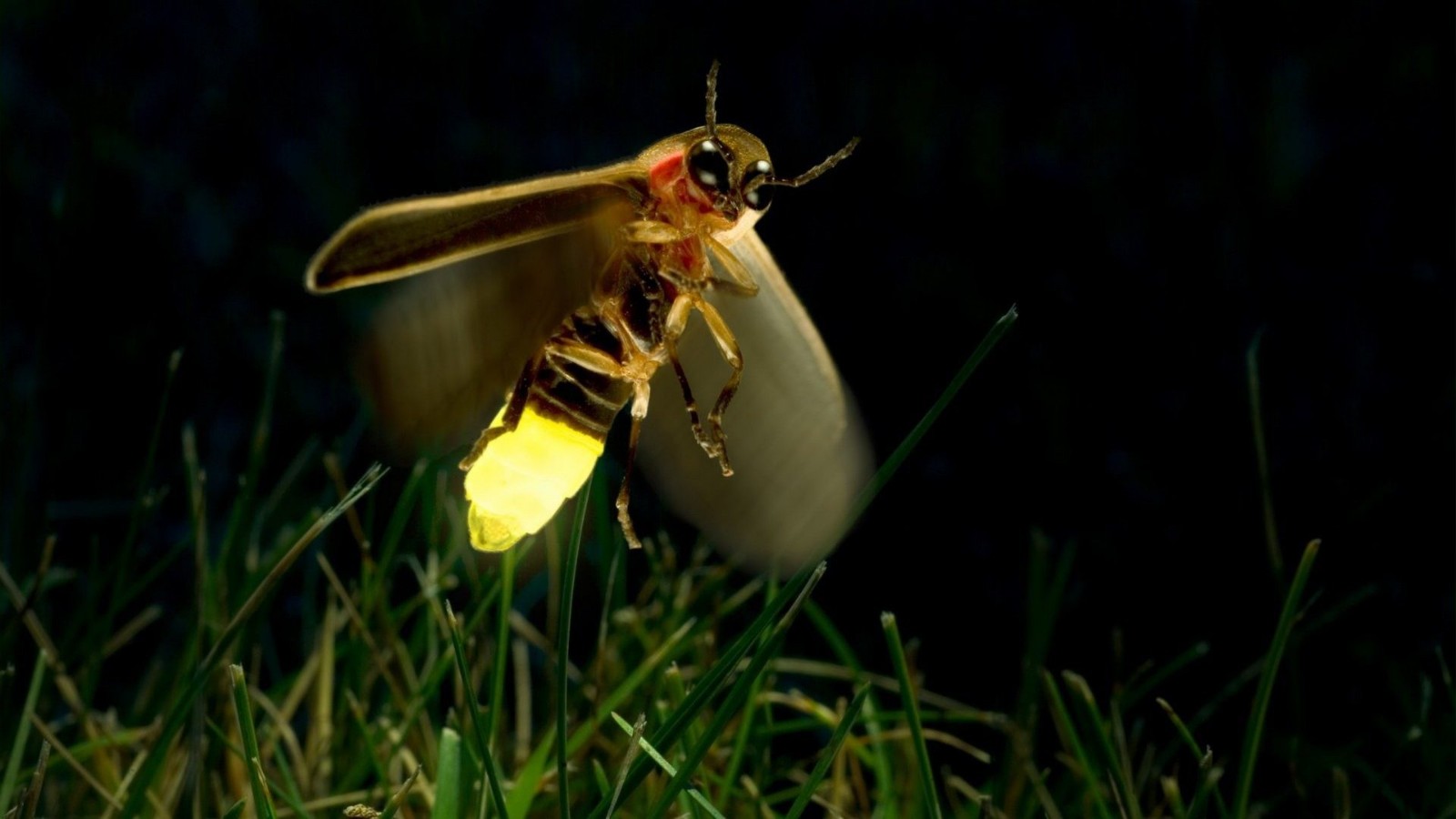
As dusk falls over meadows and forests around the world, tiny points of light flicker in the darkness—these are fireflies, also known as lightning bugs. These small beetles have the magical ability to produce light through a process called bioluminescence, using it to communicate, attract mates, and even defend themselves.
The light produced by fireflies is cold light, meaning almost all of the energy is converted into light rather than heat—unlike incandescent bulbs, which waste most energy as heat. This bioluminescence comes from a chemical reaction in their abdomen: a substance called luciferin reacts with oxygen, luciferase (an enzyme), and ATP (energy molecule) to produce light. Fireflies can control when they glow by regulating the flow of oxygen to their abdomen.
Each firefly species has its own unique flash pattern—some flash once every few seconds, others in a series of quick bursts, and some even glow continuously. Male fireflies fly around flashing their pattern to attract females, who wait on the ground or on plants and respond with their own flash if interested. This precise communication helps fireflies find mates of the same species.
Firefly larvae (called glowworms) also glow, using their light to warn predators that they’re toxic. Glowworms live in moist environments like soil, leaf litter, or underwater, feeding on snails and other small creatures. Unfortunately, firefly populations are declining due to light pollution (which disrupts their mating signals), habitat loss, and pesticide use. Reducing light pollution in natural areas and preserving moist habitats can help keep these glowing magicians lighting up our nights.