When a hummingbird hovers in front of a flower, it flaps its wings 80 times per second, and its heart rate reaches an astonishing 1,260 beats per minute—meaning in the blink of an eye (about 0.3 seconds), its heart has beaten nearly 40 times. This tiny bird, weighing only 2-20 grams, possesses the most powerful cardiovascular system in the animal kingdom, truly deserving the title of “gem of the air”.
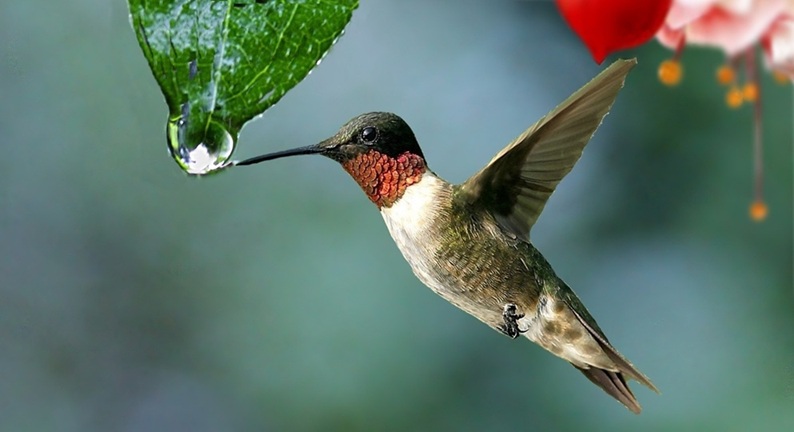
The hummingbird’s heart rate is a marvel of nature. At rest, their heart rate is approximately 250 beats per minute, but when flying at full capacity, it can soar to 1,260 beats per minute—more than 8 times the maximum heart rate of human athletes. To support such high-intensity physiological activity, their heart accounts for 2.5% of their body weight, equivalent to a human having a 1.5-kilogram heart. This tiny organ pumps blood equivalent to 20 times its own weight every day to meet the oxygen needs of cells throughout the body.
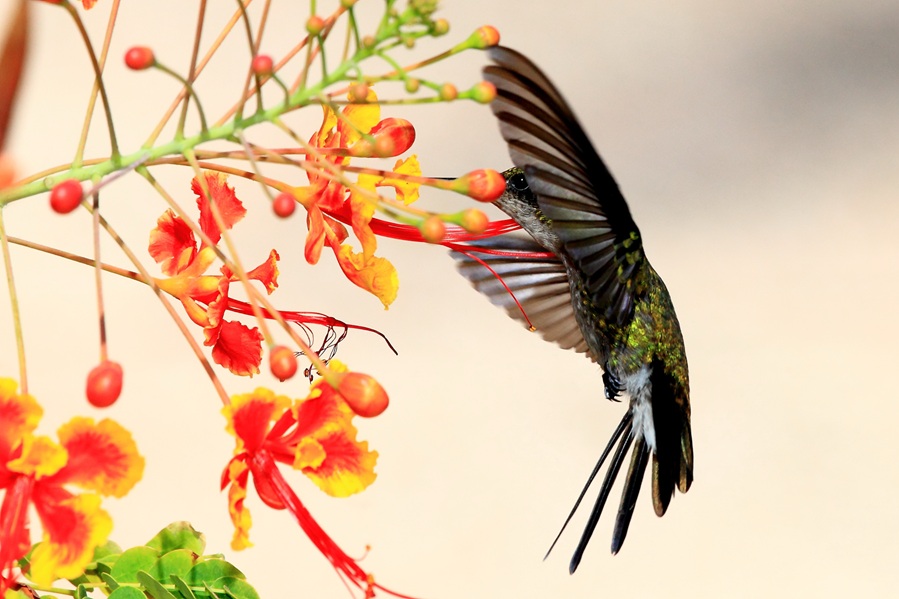
This amazing metabolic rate stems from their unique flight style. Hovering flight is one of the most energy-consuming movements in the animal kingdom. A hummingbird’s pectoral muscles account for 35% of its body weight, and these muscles are densely packed with giant mitochondria that efficiently convert sugar from nectar into energy. They need to consume 1.5-3 times their own weight in nectar every day and visit hundreds of flowers, otherwise they will face a crisis due to energy depletion.
To cope with energy shortages, hummingbirds have evolved “mini hibernation”—a torpid state. On cold nights or when food is scarce, their heart rate plummets to below 50 beats per minute, their body temperature drops from 40.5°C to 18°C, and their metabolic rate is only 1/15 of the normal state. This state allows them to survive for hours without eating until they become active again the next morning.