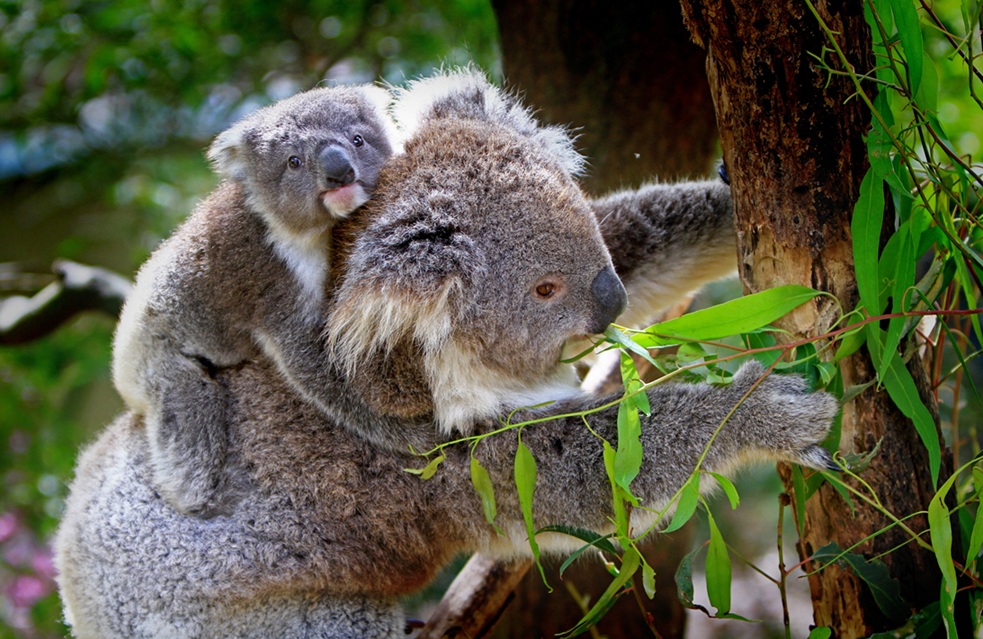
In the sun-dappled eucalyptus forests of Australia, a fuzzy gray creature clings to a tree branch, dozing peacefully for most of the day. This is the koala, often mistaken for a bear, but actually a marsupial closely related to kangaroos. With its round ears, button nose, and obsession with eucalyptus leaves, the koala is one of Australia’s most iconic animals.
Koalas have a diet that’s uniquely specialized: they eat only the leaves of eucalyptus trees—up to 1 kilogram per day. Eucalyptus leaves are toxic to most animals, but koalas have evolved a digestive system that can handle them. Their liver produces special enzymes to break down the toxins, and their long cecum (a part of the intestine) ferments the tough leaves to extract nutrients. However, eucalyptus leaves are low in energy, so koalas sleep 18-22 hours a day to conserve energy, waking only to eat and move between trees.
As marsupials, female koalas have a pouch where they carry their joeys (babies) for about six to seven months. After leaving the pouch, the joey rides on its mother’s back for another six months, learning to climb and find food. Koalas have sharp claws and opposable thumbs on their front paws, which help them grip tree trunks and branches tightly. Their thick fur protects them from both hot and cold weather, and their keen sense of smell helps them find the most nutritious eucalyptus leaves.
Koalas face threats from habitat loss due to deforestation, bushfires, and disease. Conservation efforts, such as planting eucalyptus trees and creating protected areas, are essential to ensuring these gentle eucalyptus lovers continue to thrive in their natural habitat.