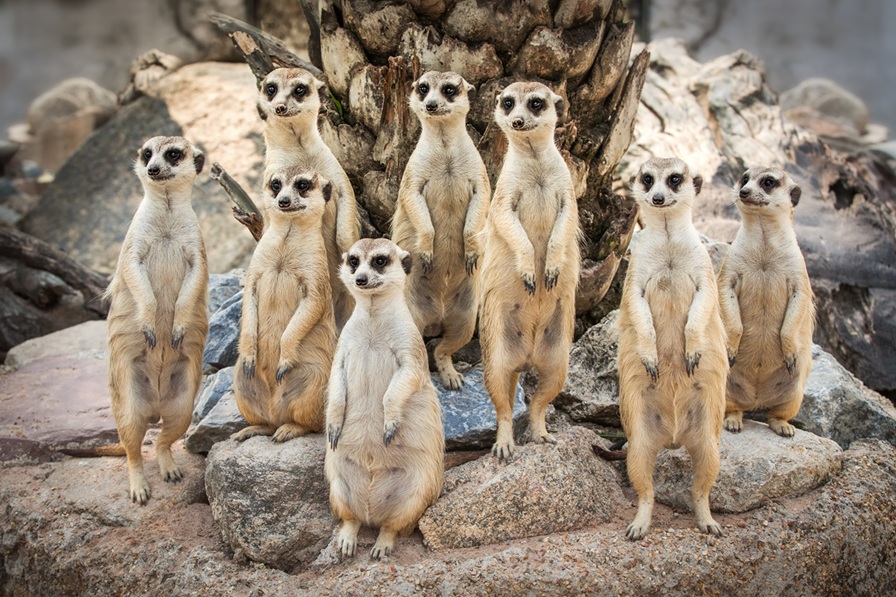
On the sun-baked plains of southern Africa, a small, slender creature stands upright on its hind legs, scanning the horizon with alert eyes. This is a meerkat, part of a tight-knit group called a “mob” or “gang,” where every member plays a vital role in survival. With their social structure and constant vigilance, meerkats are the ultimate team players of the savanna.
Meerkats have a distinctive appearance: sandy brown fur with dark bands across their backs, a pointed snout, and large, dark eyes surrounded by black patches that act like built-in sunglasses, reducing glare from the sun. Their long, thin tails help them balance when standing sentry—a behavior that defines their survival strategy. While most of the mob forages for insects, spiders, and small reptiles, one or two meerkats stand guard, emitting sharp barks to warn of predators like eagles, jackals, or snakes.
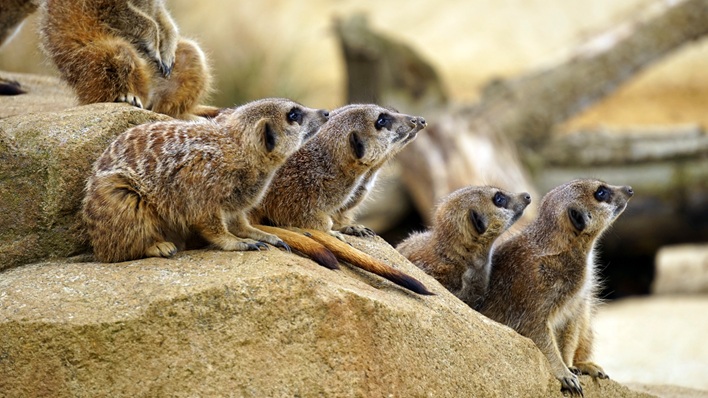
The meerkat mob operates like a well-oiled machine. They share burrows with multiple chambers, taking turns to dig and maintain the tunnels. Pups are cared for by the entire group—”babysitters” watch over them while their parents forage, and all adults teach the young how to hunt and spot danger. Meerkats even have specialized calls for different threats: a high-pitched bark for aerial predators and a deeper growl for ground threats, ensuring the mob responds appropriately.
Despite their small size (about 30 centimeters long, excluding the tail), meerkats are fearless when protecting their group. They’ve been known to mob snakes, surrounding and harassing them until the predator retreats. Their cooperative lifestyle not only helps them survive in the harsh savanna but also creates strong social bonds that last a lifetime.