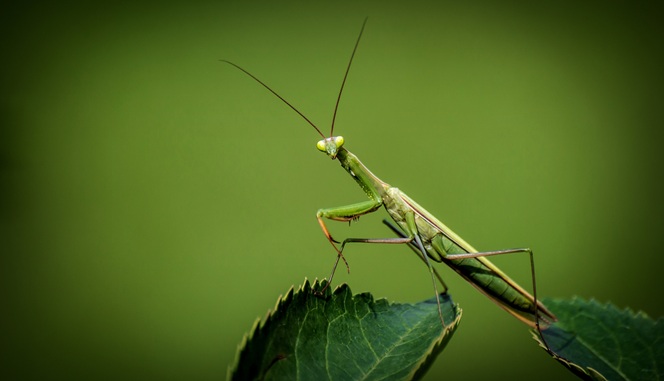
In gardens, forests, and grasslands worldwide, a slender, green or brown insect lies in wait, its front legs folded in a posture that looks like prayer—hence the name “praying mantis.” But don’t be fooled by this peaceful appearance: the praying mantis is one of the most ferocious ambush predators in the insect world, with lightning-fast reflexes and a appetite for other bugs (and sometimes even small animals).
Praying mantises have a unique body built for hunting. Their front legs are modified into powerful, spiked “raptorial legs” that snap shut like a pair of pincers, grabbing prey in milliseconds. They have large, compound eyes that give them nearly 360-degree vision, allowing them to spot movement from far away. Unlike most insects, mantises can turn their heads 180 degrees, helping them track prey without moving their bodies—critical for staying hidden until the perfect moment to strike.
These predators are opportunistic feeders, eating everything from flies, crickets, and butterflies to spiders, lizards, and even small birds or frogs. They use camouflage to blend in with leaves, stems, or flowers, waiting patiently for prey to come within striking distance. Some species even mimic flowers to attract pollinators, turning their own hunting ground into a trap.
Praying mantises have a fascinating reproductive behavior. After mating, the female often eats the male—a behavior called sexual cannibalism. While this seems brutal, it provides the female with extra nutrients to produce eggs. She lays her eggs in a hard, foamy case called an ootheca, which protects the eggs from predators and harsh weather until they hatch. Young mantises, called nymphs, look like tiny adults and start hunting immediately after hatching.
Despite their small size, praying mantises play an important role in controlling insect populations, making them beneficial to gardens and ecosystems. Their unique appearance, hunting skills, and intriguing behaviors have made them a favorite among nature lovers and a fascinating example of how insects adapt to survive as predators.