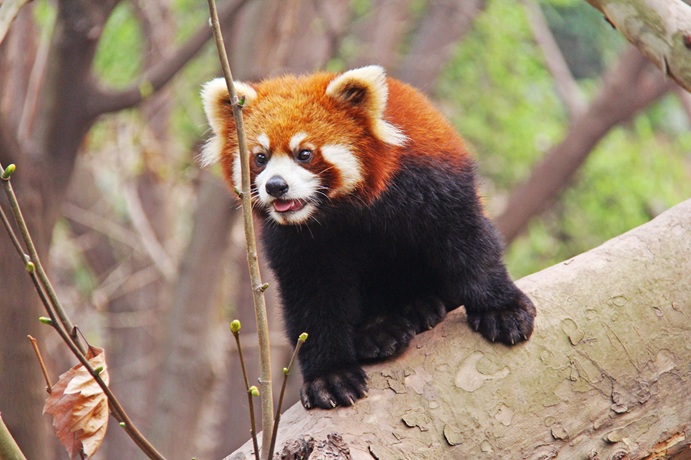
High in the misty mountain forests of the Himalayas, a fluffy red creature curls up on a tree branch, its bushy ringed tail wrapping around its body like a cozy blanket. This is the red panda, often mistaken for a relative of giant pandas—though they’re actually more closely related to raccoons. With their striking appearance and gentle demeanor, red pandas are one of the most beloved yet endangered mammals on Earth.
Red pandas have a number of unique adaptations for their tree-dwelling lifestyle. Their semi-retractable claws and flexible ankles allow them to grip branches tightly, even when climbing headfirst down trunks. Their thick, reddish-brown fur provides insulation against the cold mountain temperatures, while their bushy tails—longer than their bodies—help them balance and stay warm during winter nights. Unlike giant pandas, which eat almost every part of bamboo, red pandas mainly feed on bamboo leaves, supplemented by fruit, berries, and occasional insects or bird eggs.
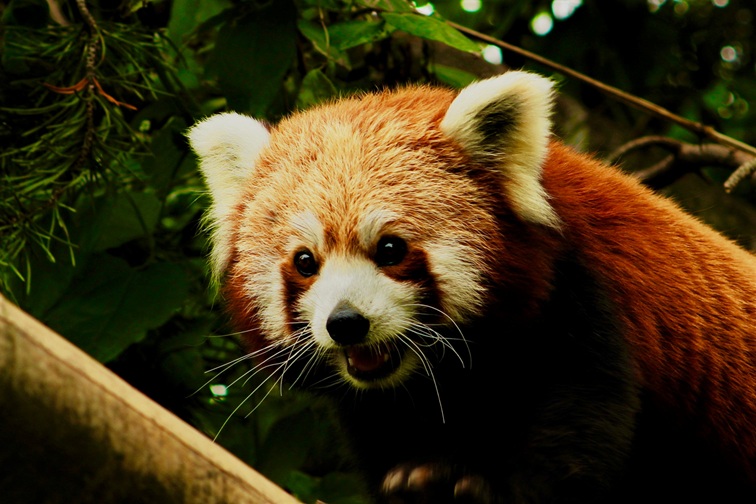
One of the red panda’s most charming behaviors is its “heat posture.” When temperatures rise, it stretches out on a branch with its limbs spread wide, maximizing the surface area exposed to cool air—a clever way to regulate body temperature in the warm summer months. They are mostly solitary animals, except during mating season, and communicate through a variety of sounds, including squeaks, chirps, and huffs.
Sadly, red pandas are classified as endangered by the IUCN, with their population declining due to habitat loss, poaching, and climate change. Conservation efforts, including protected areas and anti-poaching measures, are crucial to ensuring these “bamboo bears” continue to thrive in their mountain homes.