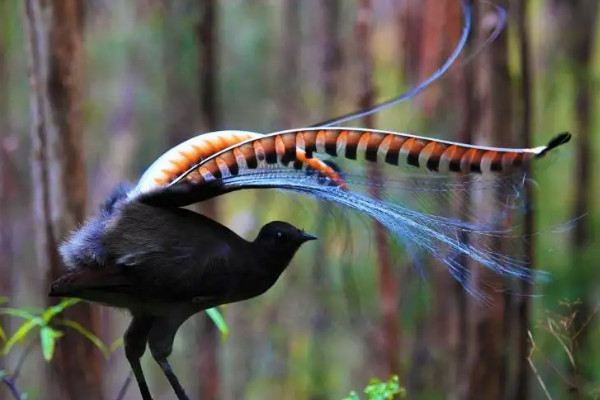
In the dense woodlands of southeastern Australia, a bird sings with the voice of a chainsaw, a camera shutter, and even a crying human baby. The superb lyrebird (Menura novaehollandiae), named for its lyre-shaped tail, is one of the animal kingdom’s most accomplished mimics. Its ability to copy sounds from its environment has made it a viral sensation, with millions of YouTube views, but recent research reveals a darker side to this talent: male lyrebirds use deceptive mimicry to manipulate females during courtship.
Lyrebirds have two distinct types of mimicry, according to a 2021 study from the Australian National University. The first is their famous “recital” mimicry—loud, elaborate imitations of up to 20 other bird species, including kookaburras and whipbirds. These performances can last for hours and are so convincing they often fool the birds being imitated. The second type, discovered by the research team, is a deceptive tactic used at display mounds where mating occurs. When a female tries to leave without mating or during copulation itself, males mimic mobbing calls—the alarm sounds birds make to rally a group against predators. They layer these calls to create the illusion of a large flock responding to a threat, complete with wingbeat sounds.
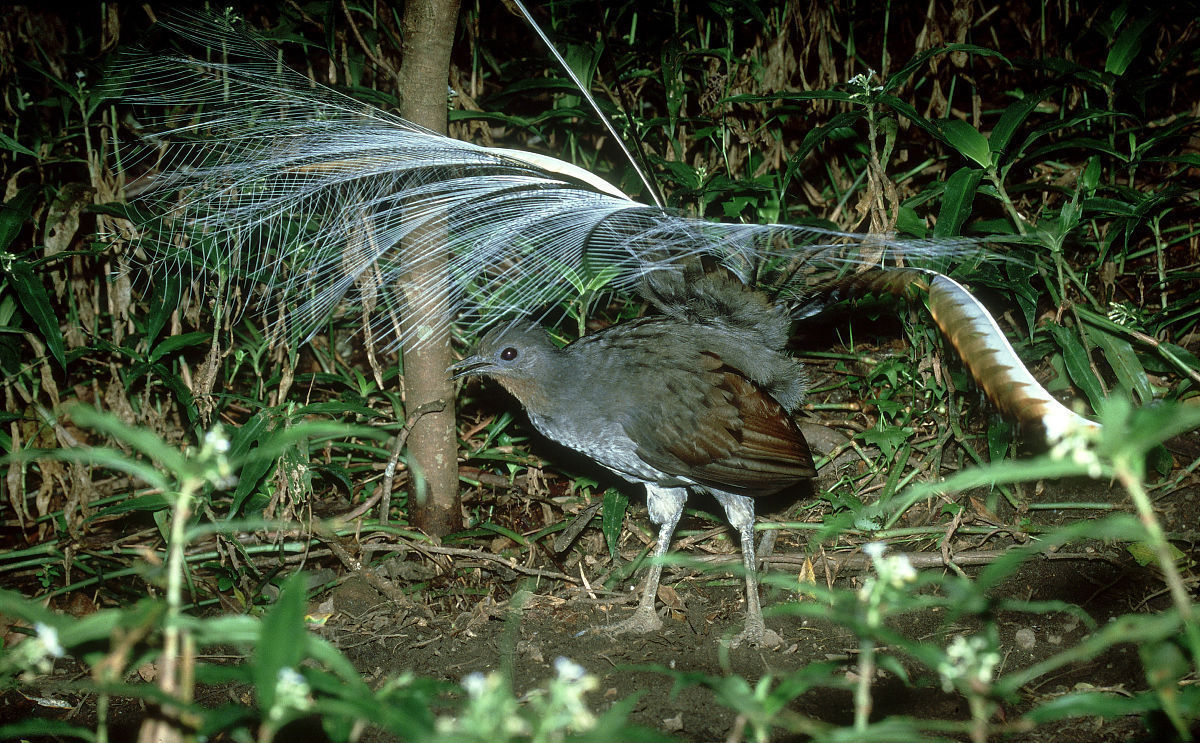
This mimicry acts as a “sensory trap,” tricking females into staying or freezing. “Mimicking when the female attempts to leave may be a bit like saying ‘it’s dangerous outside, stay,’ while mimicking during copulation could extend the duration, like saying ‘freeze,’ making sure the sperm is transferred,” explains lead author Dr. Anastasia Dalziell. The researchers were astonished to find this behavior occurred during every copulation they filmed, with copulations averaging 45 seconds—far longer than the typical 2-second duration in most songbirds.
Lyrebird mimicry is culturally transmitted, passed down from generation to generation. When lyrebirds were introduced to Tasmania in the 1930s, successive generations continued to mimic the eastern whipbird—a species not found on the island—for decades, though the imitation became distorted over time. Captive lyrebirds often incorporate human-made sounds into their repertoire: Echo, a 7-year-old male at Sydney’s Taronga Zoo, imitates a baby’s cry, a power drill, and the zoo’s fire alarm, including the “evacuate now” announcement. “It would be difficult for these birds not to duplicate some of the sounds they hear in a zoo setting,” says unit supervisor Leanne Golebiowski.
While the lyrebird’s mimicry skills are celebrated, its habitat faces threats from deforestation and climate change. Conservation efforts focus on protecting the temperate forests of Victoria, New South Wales, and Queensland where these birds live. As Dr. Dalziell notes, “The more we researched it, the more remarkable this behavior became. It’s a testament to the complexity of animal communication and the lengths species will go to ensure reproductive success.”